


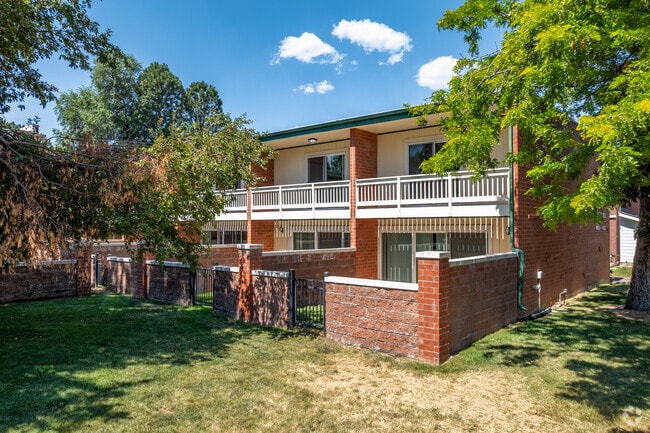
955 16th St.
1 Bed
$1,870 - $1,900Plus Fees
12 Month Lease


Applicant has the right to provide the property manager or owner with a Portable Tenant Screening Report (PTSR) that is not more than 30 days old, as defined in § 38-12-902(2.5), Colorado Revised Statutes; and 2) if Applicant provides the property manager or owner with a PTSR, the property manager or owner is prohibited from: a) charging Applicant a rental application fee; or b) charging Applicant a fee for the property manager or owner to access or use the PTSR.
School
Commute Time (Distance)
Drive: 4 min (1.3 mi)
Drive: 5 min (2 mi)
Drive: 9 min (3.5 mi)
Drive: 10 min (4.5 mi)
Property Information
The fees below are based on community-supplied data and may exclude additional fees and utilities.
No Pets Allowed
Property Fee Disclaimer Based on community-supplied data and independent market research. Subject to change without notice. May exclude fees for mandatory or optional services and usage-based utilities.
Walkability
Moderately walkable60 / 100
Transit
Some public transit40 / 100
Driveability
Very drivable80 / 100
Bikeability
Moderately bikeable70 / 100

Shoppers will appreciate 1500 Alpine Ave. proximity to Ideal Broadway Shops, Community Plaza, and Pearl Street Mall. Ideal Broadway Shops is 0.3 miles away, and Community Plaza is within a 5 minute walk.
With a TransitScore of 40, 1500 Alpine Ave. has some public transit, including 5 transit stops within 26.3 miles. Transit options include Eastlake - 124Th Station Track 2 and Northglenn - 112Th Station Track 2.
Recreational activities near 1500 Alpine Ave. are plentiful. Discover 5 parks within 1.9 miles, including Pearl Street Pedestrian Mall, Andrews Arboretum, and Centennial and Sanitas Trailhead.
Living in Whittier-Boulder provides easy access to Denver International, located just 54 minutes from 1500 Alpine Ave..
Green grass is one of the most familiar and comforting sights in nature, often symbolizing freshness, life, and tranquility. It blankets parks, lawns, fields, and meadows in vibrant shades of green that change subtly with the seasons and weather. The... soft blades sway gently in the breeze, offering a soothing rhythm to those who take the time to observe. Grass plays a vital ecological role—it helps prevent soil erosion, provides oxygen through photosynthesis, and serves as a habitat and food source for countless insects and animals. The scent of freshly cut grass, rich and earthy, evokes memories of summer days, childhood play, and weekend yard work. For many, green grass represents a well-kept garden or an inviting outdoor space, often maintained through regular watering, mowing, and care. In agriculture, grass is crucial as pasture for livestock, while in urban environments, it helps reduce heat and improve air quality. Its resilience allows it to thrive in diverse climates, from lush valleys to high-altitude plains. Beyond its practical uses, green grass also holds cultural and emotional significance, featured in poetry, art, and sayings like “the grass is always greener on the other side.” Whether admired for its beauty, its function, or its symbolism, green grass is a simple yet powerful element of the natural world that quietly supports life while offering moments of peace and connection to the earth. Green grass is one of the most familiar and comforting sights in nature, often symbolizing freshness, life, and tranquility. It blankets parks, lawns, fields, and meadows in vibrant shades of green that change subtly with the seasons and weather. The soft blades sway gently in the breeze, offering a soothing rhythm to those who take the time to observe. Grass plays a vital ecological role—it helps prevent soil erosion, provides oxygen through photosynthesis, and serves as a habitat and food source for countless insects and animals. The scent of freshly cut grass, rich and earthy, evokes memories of summer days, childhood play, and weekend yard work. For many, green grass represents a well-kept garden or an inviting outdoor space, often maintained through regular watering, mowing, and care. In agriculture, grass is crucial as pasture for livestock, while in urban environments, it helps reduce heat and improve air quality. Its resilience allows it to thrive in diverse climates, from lush valleys to high-altitude plains. Beyond its practical uses, green grass also holds cultural and emotional significance, featured in poetry, art, and sayings like “the grass is always greener on the other side.” Whether admired for its beauty, its function, or its symbolism, green grass is a simple yet powerful element of the natural world that quietly supports life while offering moments of peace and connection to the earth.
Green grass is one of the most familiar and comforting sights in nature, often symbolizing freshness, life, and tranquility. It blankets parks, lawns, fields, and meadows in vibrant shades of green that change subtly with the seasons and weather. The soft blades sway gently in the breeze, offering a soothing rhythm to those who take the time to observe. Grass plays a vital ecological role—it helps prevent soil erosion, provides oxygen through photosynthesis, and serves as a habitat and food source for countless insects and animals. The scent of freshly cut grass, rich and earthy, evokes memories of summer days, childhood play, and weekend yard work. For many, green grass represents a well-kept garden or an inviting outdoor space, often maintained through regular watering, mowing, and care. In agriculture, grass is crucial as pasture for livestock, while in urban environments, it helps reduce heat and improve air quality. Its resilience allows it to thrive in diverse climates, from lush valleys to high-altitude plains. Beyond its practical uses, green grass also holds cultural and emotional significance, featured in poetry, art, and sayings like “the grass is always greener on the other side.” Whether admired for its beauty, its function, or its symbolism, green grass is a simple yet powerful element of the natural world that quietly supports life while offering moments of peace and connection to the earth. Green grass is one of the most familiar and comforting sights in nature, often symbolizing freshness, life, and tranquility. It blankets parks, lawns, fields, and meadows in vibrant shades of green that change subtly with the seasons and weather. The soft blades sway gently in the breeze, offering a soothing rhythm to those who take the time to observe. Grass plays a vital ecological role—it helps prevent soil erosion, provides oxygen through photosynthesis, and serves as a habitat and food source for countless insects and animals. The scent of freshly cut grass, rich and earthy, evokes memories of summer days, childhood play, and weekend yard work. For many, green grass represents a well-kept garden or an inviting outdoor space, often maintained through regular watering, mowing, and care. In agriculture, grass is crucial as pasture for livestock, while in urban environments, it helps reduce heat and improve air quality. Its resilience allows it to thrive in diverse climates, from lush valleys to high-altitude plains. Beyond its practical uses, green grass also holds cultural and emotional significance, featured in poetry, art, and sayings like “the grass is always greener on the other side.” Whether admired for its beauty, its function, or its symbolism, green grass is a simple yet powerful element of the natural world that quietly supports life while offering moments of peace and connection to the earth.
1500 Alpine Ave. is located in Boulder, CO in the 80304 zip code.
Within 50 Miles of 1500 Alpine Ave.
12 Month Lease
12 Month Lease

12 Month Lease